
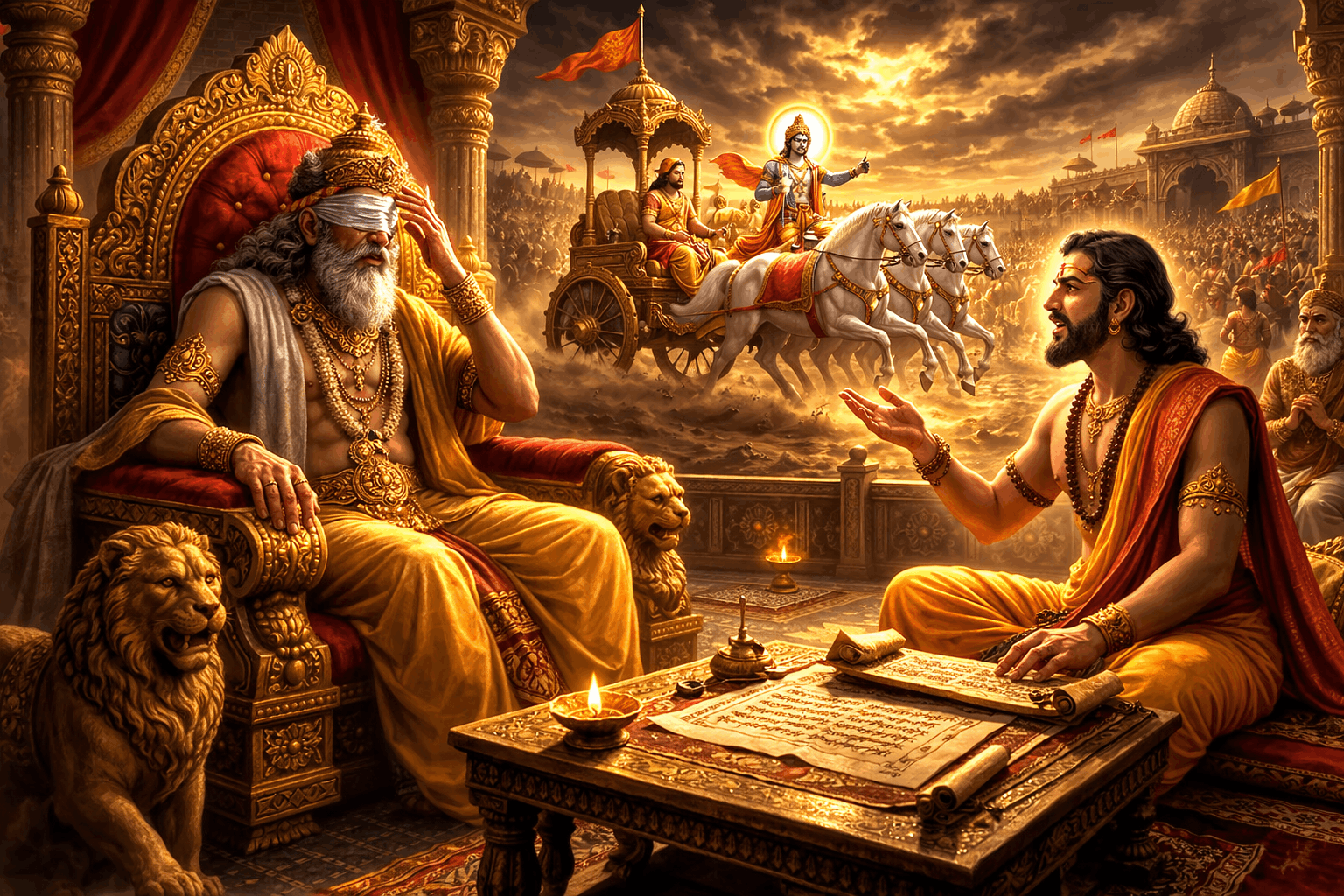
The Gita begins with Dhritarashtra questioning Sanjaya about the events in Kurukshetra. Kurukshetra is also a Dharmakshetra—a place known for uplifting Dharma. Dhritarashtra knows this battlefield will uphold righteousness. While he logically tries to convince himself his sons are in the right, in his heart, he knows the Pandavas are the true upholders of Dharma. He acknowledges the significance of the location and fears it might dampen his sons' dreams, yet he still hopes they will win. The opening line highlights Dhritarashtra's internal dilemma.
He uses the word mamakah, referring to the Kauravas as "his own," subtly categorizing the others as outsiders. As a king, he is presiding over a fight among family and friends. However, by referring to the Kauravas as mamakah, he reveals his partiality toward his sons and their supporters. According to the rules of Raja Dharma, a king should be impartial, protecting the righteous and performing the right Karma.
How is this applicable in business? For a pilot or launch, the "place" (market/context) is crucial. When starting a business, you must choose the right time, place, and fabric. You may allow a competitor to feel comfortable in that space, but you must keep certain "cards" close to your chest. Because Kurukshetra is a Dharmakshetra, Dharma is destined to win—a hidden advantage for the Pandavas. Dhritarashtra’s "blind spot" regarding his sons' actions is ultimately exploited by Krishna and the Pandavas.
By using "mamakah" in a battle of kin, Dhritarashtra signals his bias and lack of commitment to Dharma. When a leader speaks carelessly, employees notice. Most people are observant and catch these slips quickly. For example, in Shloka 13, Sanjaya eventually responds that "your people are scared." While Sanjaya initially ignores the biased phrasing, he eventually mirrors it to reflect the reality of the situation.
As a leader, you must consciously choose your words and avoid careless speech. People around you will not only notice these behaviors but may also use them to revolt or challenge you at the right time. Such behavior negatively impacts a leader's reputation and the overall organizational culture.
Comments & Reviews
Share Your Thoughts
Comments (0)
No comments yet. Be the first to share your thoughts!