UdyamGita

The Gita Blueprint for Leading and Winning in Business

UdyamGita

Arjuna Viṣhāda Yoga

Chapter 1 - Verse 24,25
सञ्जय उवाच |
एवमुक्तो हृषीकेशो गुडाकेशेन भारत |
सेनयोरुभयोर्मध्ये स्थापयित्वा रथोत्तमम् || 24||
भीष्मद्रोणप्रमुखत: सर्वेषां च महीक्षिताम् |
उवाच पार्थ पश्यैतान्समवेतान्कुरूनिति || 25||

Translation

Sanjaya said: O Bhaarata! (Dhrutarashtra, from the lineage of King
Bharata)! Lord Hrishikesha (Krishna), addressed thus by Gudakesha
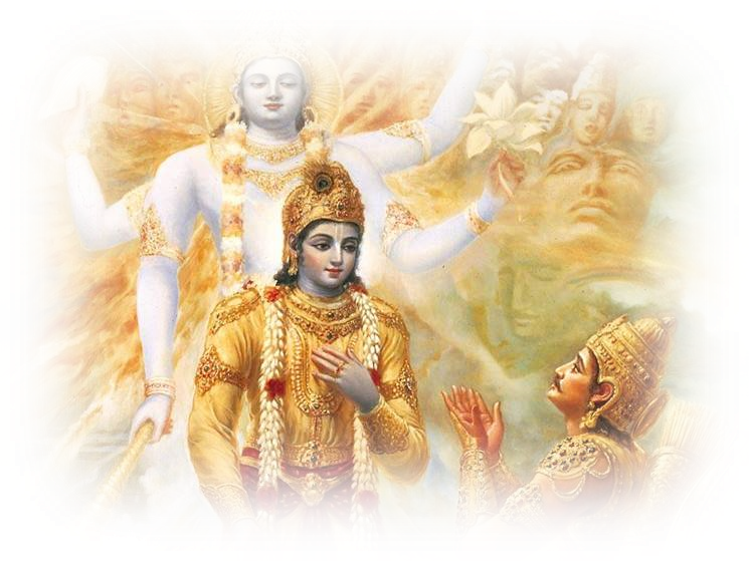
(Arjuna) positioned the grand chariot in between the two armies. In the presence of Bheeshma, Dronacharya, and all the other kings, Shree Krishna said: O Parth, behold these Kurus gathered here.

Turning the chariot towards Bheeshma, Drona and other kings, Lord
Krishna said - O Partha (Arjuna)! Look at all the Kauravas assembled here.

Unfiltered First Take

Krishna, like an obedient sarathi, without questioning Arjuna, takes him to the middle of the field. Krishna never questions Arjuna’s intent, nor does he humiliate his approach or start giving him gyaan. He quietly follows Arjuna’s instructions.

When you step down, be ready to follow your boss’s instructions, even if they were once your friend or subordinate. Do your duty without questioning them or humiliating them. You have stepped down for a reason and to fulfil a purpose.

Krishna knows that Arjuna respects Drona and Bhishma deeply. He deliberately parks the rath in front of them and utters the word “Kuru,” hinting to Arjuna that he is looking at his own family members. Krishna wants Arjuna to feel the emotions, express them, and vent them out. By doing this, Krishna allows it to happen. He does not make any direct statement, but merely ignites the thought, which then cascades into questioning the very purpose of the war.

Krishna foresees Arjuna’s possible emotional breakdown due to the very nature of the war, a war against family and friends. He knows it is better for Arjuna to address this before the war begins so that he can fully focus once the war starts. There would be no room for emotional breakdown once the war was underway. Krishna subtly pushes Arjuna to face his weakest point immediately, so that he can deal with it and emerge stronger.

In business as well, get your emotions under control before you start taking action. You should clearly understand the scope, purpose, and intent of your actions, especially when they are against your own people or system, be it employees, vendors, partners, or investors. Emotional breakdown is not a matter of shame. In fact, it helps you discover the real purpose behind your actions.

Do you think Arjuna would have listened to and understood Krishna’s Gita jnana if he had not experienced the lowest point of his emotions himself?

Krishna makes Arjuna receptive by allowing him to go through emotional turmoil. When you see a person or a team in need of advice, ensure they are receptive. If not, raise the right questions or make statements that help them think, feel the need for change, and become receptive. Only then should valuable guidance be shared.

UdyamGita Interpretation

Responding to Arjuna’s request, Krishna quietly steers the chariot into the space between the two armies. He does not question Arjuna’s intent, nor does he offer advice prematurely. He simply executes the instruction—precisely and respectfully.

Then, with deliberate placement, Krishna halts the chariot before Bhishma, Dronacharya, and the assembled kings. He utters just one line to Arjuna: “Behold these Kurus gathered here.”

No sermon. No explanation. Just a mirror.


Business Insight

Krishna demonstrates a rare leadership quality: disciplined restraint.

Despite his stature and wisdom, he does not override Arjuna’s request, challenge his thinking, or impose guidance prematurely. When leaders intentionally step into supporting roles, they must fully honor that role. Authority is not asserted through reminders of past hierarchy, but through trustworthy execution.

In business, when senior leaders step down—or choose to support others—they must do so without questioning, humiliating, or micromanaging. Stepping down without humility defeats the purpose of stepping down at all.

Leadership Lesson

Krishna’s deeper mastery lies in timing emotional truth.

He knows Arjuna deeply—his reverence for Bhishma and Drona, his attachment to family, his moral sensitivity. By positioning the chariot before them and using the word “Kuru”, Krishna intentionally triggers Arjuna’s emotional reality.

This is not manipulation—it is preparation.

Krishna foresees Arjuna’s inevitable emotional collapse. He ensures it happens before the war begins, not during it. Once battle starts, there will be no space for inner conflict. Emotional clarity must precede decisive action.

Great leaders do not suppress emotions—they surface them safely and early. Emotional breakdown is not weakness; unresolved emotion during execution is.

Krishna also understands a critical truth: wisdom is absorbed only when the listener is receptive. Had Arjuna not reached his emotional lowest point, the Gita would have fallen on closed ears. Krishna first makes Arjuna feel—only then does he teach.

In leadership, advice offered before receptivity is wasted. Wise leaders ask questions, create reflection, or provoke insight—before offering solutions.

Key Takeaways

  • Honor the role you choose: Stepping down requires humility, not authority reminders.
  • Execution before explanation: Sometimes the best leadership response is silent action.
  • Surface emotions early: Unaddressed feelings sabotage execution later.
  • Receptivity precedes wisdom: Advice works only when the listener is ready.
  • Emotional clarity strengthens resolve: Facing inner conflict early builds lasting strength.

Comments & Reviews

Share Your Thoughts

Comments (0)

No comments yet. Be the first to share your thoughts!

Share this Verse