UdyamGita

The Gita Blueprint for Leading and Winning in Business

UdyamGita

Jnana Yoga

Chapter 4 - Verse 6
अजोऽपि सन्नव्ययात्मा भूतानामीश्वरोऽपि सन् |
प्रकृतिं स्वामधिष्ठाय सम्भवाम्यात्ममायया || 6||

Translation

I am not born like everyone; My body does not perish, and I am the
controller of all beings. Through the entities of material nature created by
Me, I manifest Myself in My transcendental form based on My own free
will.

Unfiltered First Take

Many employees have their own perspective of the entrepreneur. Some think he should know all the tasks each employee does on a day to day basis. Some think it is enough if he has fair knowledge about everything and need not be hands on. Others believe he should not worry about day to day operations and should hand them over to the next level in the hierarchy and focus only on high level strategy and planning.

But in reality, it is the flexibility an entrepreneur shows from time to time to get things done that makes him the leader of the business. When the time comes, he can ask the right questions, quickly learn, get onto the task himself, resolve it on his own, or involve the right people at the right time. He is never rigid and is always ready to take up any role when needed. Though he is the owner of the organization, he performs his duties like any other employee, with goals and tasks in mind.

The big difference is that for him, each activity happening in the organization contributes to his vision, whereas other employees work with a limited vision assigned to them. Since he has both a bird eye view and attention to detail, he is able to see gaps in the system as well as good practices. So when he gets onto a certain task, even though the task completion may be the same, his targeted level of achievement is much higher and broader.

UdyamGita Interpretation

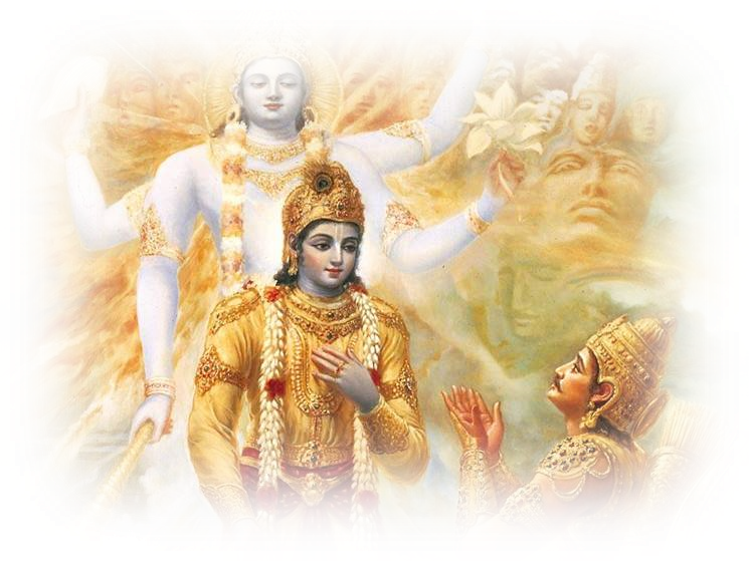
Krishna reveals a profound paradox. Though eternal and beyond limitations, He willingly enters the world and acts within it. He is not compelled by circumstance; He chooses to engage. His involvement does not diminish His stature—it defines His leadership.

This verse highlights a timeless truth: true authority is not lost by participation; it is strengthened by conscious involvement.

Business Insight

Employees often hold differing expectations from an entrepreneur:

  • Some expect the founder to know every task in detail
  • Some believe broad understanding is sufficient
  • Some feel the entrepreneur should stay away from operations and focus only on strategy

In reality, leadership is not about fitting into one rigid definition. What makes an entrepreneur effective is situational flexibility.

A strong entrepreneur can:

  • Ask the right questions when needed
  • Quickly grasp unfamiliar details
  • Step into execution during critical moments
  • Delegate or withdraw once stability returns

This adaptability—moving seamlessly between strategy and execution—is what keeps organizations resilient.

Leadership Lesson

An entrepreneur, like Krishna, is the owner of the system yet willingly operates within it.

The difference between the entrepreneur and others is not the task being done, but the lens through which it is done:

  • The entrepreneur sees every activity as a contributor to the larger vision
  • Employees operate within assigned scopes and defined outcomes

Because the entrepreneur holds both the bird’s-eye view and the ground-level understanding, when they engage in any task, their benchmark of success is broader—impacting systems, culture, and future scalability.

Leadership is not rigidity of role; it is mastery of movement across roles.

Key Takeaways

  • Leadership is defined by flexibility, not position.
  • Founders must move fluidly between strategy and execution.
  • Task involvement does not reduce authority—it reinforces it.
  • Vision gives meaning to every action taken by a leader.
  • Bird’s-eye view plus attention to detail creates exceptional outcomes.

Comments & Reviews

Share Your Thoughts

Comments (0)

No comments yet. Be the first to share your thoughts!

Share this Verse