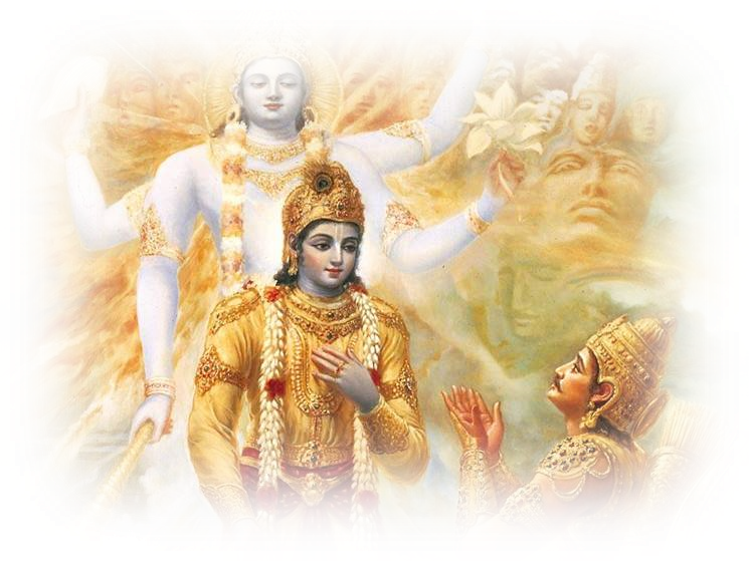
UdyamGita

The Gita Blueprint for Leading and Winning in Business

UdyamGita

Rāja Vidyā Yoga

Chapter 9 - Verse 20,21
त्रैविद्या मां सोमपा: पूतपापा यज्ञैरिष्ट्वा स्वर्गतिं प्रार्थयन्ते |
ते पुण्यमासाद्य सुरेन्द्रलोक मश्नन्ति दिव्यान्दिवि देवभोगान् || 20||
ते तं भुक्त्वा स्वर्गलोकं विशालं क्षीणे पुण्ये मर्त्यलोकं विशन्ति |
एवं त्रयीधर्ममनुप्रपन्ना गतागतं कामकामा लभन्ते || 21||

Translation

Those with superficial (and literal) knowledge of the three Vedas,
propitiate Me with Vedic rituals and crave for heavenly riches. Based on
their good deeds, they attain the heaven presided by deity Indra and enjoy
the luxuries therein.

They indulge in enjoying luxuries in expansive heavenly worlds, and
after exhausting their credits from good deeds (punya), are reborn in this
world. Focused only on the superficial aspects of the Vedas, they perform
rituals seeking heavenly pleasure and are stuck in this cycle.

Unfiltered First Take

Meanwhile, people who are interested in materialistic possessions, and who are not directly driven by any particular vision but are ready to align with the vision of other organizations, join corporates as employees. They enjoy the perks and benefits they receive there. They may have all the skills and knowledge needed to run the business, but their focus remains on aligning with organizational requirements to receive those benefits and perks. They continue to enjoy these benefits as long as their needs are met in that organization. Once the organization fails to serve their demands, they look for another organization that can meet their needs and shift accordingly. This shifting continues based on materialistic needs and the demand and supply match.

Therefore, when an entrepreneur hires employees, he should understand the basic difference between being an entrepreneur and being an employee. An employee continues to serve as long as he is satisfied. An entrepreneur keeps working towards the goal irrespective of whether his happiness or personal demands are met or not. This understanding helps the entrepreneur set the right expectations from employees and build a robust system that eliminates dependency on any single employee.

UdyamGita Interpretation

Krishna describes people who follow ritualistic paths with a clear expectation of reward. Their actions are sincere, disciplined, and even purifying—but desire-driven.

They reach higher realms, enjoy refined pleasures, and live well for a while. Yet once the merit that enabled those rewards is exhausted, they return to the same plane. The cycle repeats.

The insight is sharp:

Effort driven by reward leads to elevation—but not liberation.

Business Insight

This maps directly to how many professionals operate in the corporate ecosystem.

People driven primarily by material outcomes—salary, perks, designations, stability—align themselves with organizational visions not because it is their own, but because it serves their needs. They are capable, skilled, and valuable.

They enjoy the benefits as long as there is alignment between what they want and what the organization provides.

Once that alignment breaks, they move on.

This is not disloyalty—it is contractual consciousness.

They operate in cycles of demand and supply, reward and exhaustion.

Leadership Lesson

An entrepreneur must clearly understand the fundamental difference between ownership and alignment.

  • An employee works while the system meets his expectations.
  • An entrepreneur works toward the vision even when nothing works in his favor.

This clarity protects founders from unrealistic expectations. Employees are not wrong for optimizing happiness; entrepreneurs are simply wired differently.

The wise entrepreneur builds systems—not heroes.

Processes, redundancy, documentation, and culture ensure that the business does not collapse when individuals move on.

Key Takeaways

  • Reward-driven effort creates cycles, not permanence.
  • Employees align with vision conditionally; entrepreneurs commit unconditionally.
  • Attrition is not betrayal—it is predictable behavior when incentives change.
  • Expecting ownership from non-owners creates frustration on both sides.
  • Robust systems reduce dependency and increase organizational resilience.

Comments & Reviews

Share Your Thoughts

Comments (0)

No comments yet. Be the first to share your thoughts!

Share this Verse